Impact Assessment Reports | Maji na Ufanisi
Impact Assessment Reports

Evidence that informs action and strengthens trust.

Maji na Ufanisi publishes baseline studies, climate resilience research, school WASH assessments, advocacy reports, and annual accounts so communities, funders, governments, and partners can see how evidence shapes better decisions.

6Featured reports available for review
3Counties represented in school and governance studies
Multi-yearEvidence spanning baseline, annual, climate, and impact studies
Open accessReports available to download directly
Baseline survey cover for informal settlements in Kasarani
Research that serves communities

From lived realities to stronger programmes.

Good development decisions begin with a clear understanding of people, place, infrastructure, risk, and opportunity.

These reports help Maji na Ufanisi and its partners identify priority needs, test assumptions, assess results, strengthen accountability, and improve the design of future water, sanitation, climate resilience, and community development initiatives.

Evidence does more than describe a problem. It helps communities and partners decide what to do next, where to invest, and how to create change that lasts.
Report library

Explore the evidence behind our work.

Browse baseline research, climate resilience studies, annual reporting, advocacy, and school WASH assessment documents.

Baseline study Baseline Survey for Informal Settlements Kasarani report cover

Baseline Survey for Informal Settlements – Kasarani Report

A foundational study designed to clarify conditions, needs, service gaps, and development priorities within informal settlements in Kasarani, Nairobi.
KasaraniNairobiBaseline evidence
Climate resilience Climate Resilience for Nairobi Informal Settlements report cover

Climate Resilience for Nairobi’s Informal Settlements Report

An examination of climate vulnerability, infrastructure pressures, and resilience priorities affecting Nairobi’s informal settlements.
Climate riskInformal settlementsNairobi
Annual report Annual Report and Accounts 2011 report cover

Annual Report and Accounts 2011

A record of organisational activities, achievements, partnerships, and financial accountability for the reporting period.
Annual reportingAccountsAccountability
Climate options Research and Analysis of Climate Resilience Options report cover

Research and Analysis of Climate Resilience Options for Nairobi Slum and Informal Settlements

A detailed analysis of climate resilience pathways and practical options for communities facing environmental and infrastructure pressure.
ResearchAdaptation optionsUrban resilience
Advocacy Advocacy on Good Governance on Water Resources and Sanitation report cover

Advocacy on Good Governance of Water Resources and Sanitation in Mombasa and Taita Taveta Counties

A report focused on governance, accountability, public participation, and improved management of water and sanitation resources.
MombasaTaita TavetaWater governance
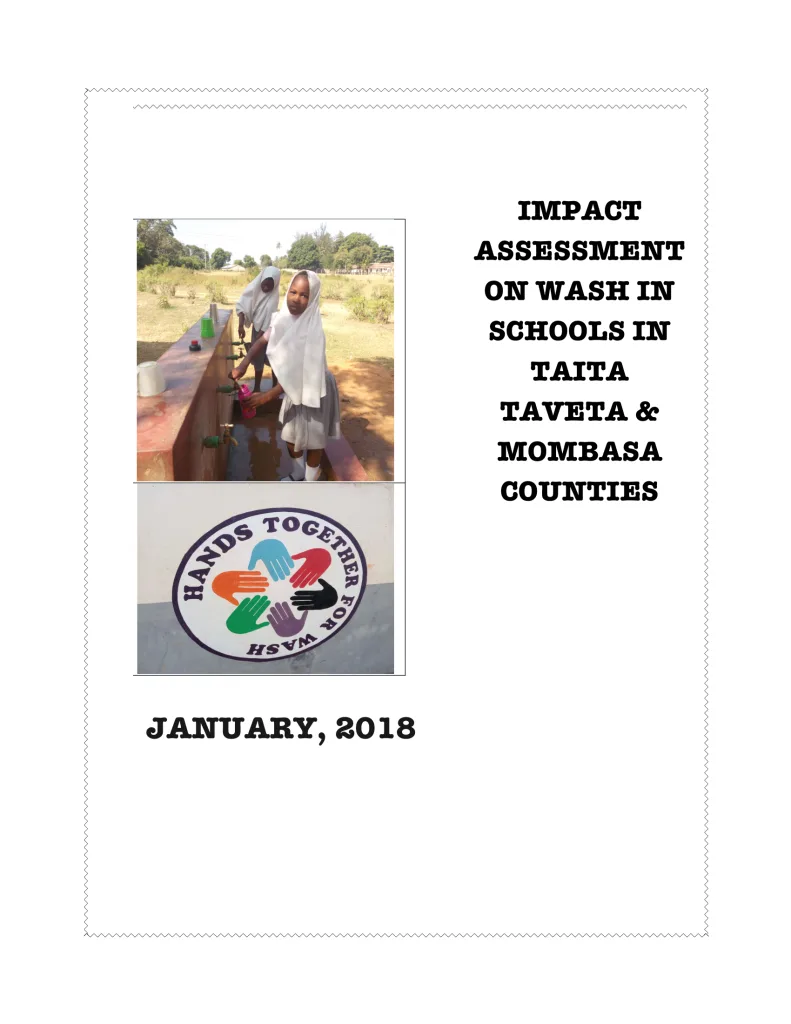
School WASH Impact Assessment on WASH in Schools report cover

Impact Assessment on WASH in Schools in Taita Taveta and Mombasa Counties, 2018

An assessment of school water, sanitation, and hygiene interventions, with attention to access, dignity, learning conditions, and sustainability.

SchoolsWASHImpact assessment
Why partners value this evidence

Research that supports better decisions.

🎯

Sharper targeting

Baseline evidence helps identify where needs are greatest and which interventions are most relevant.

📈

Measurable progress

Impact assessments make it easier to compare conditions, outcomes, and lessons over time.

🛡

Greater accountability

Published reports give donors and partners a clearer basis for due diligence and stewardship.

🧭

Stronger planning

Research supports better programme design, adaptation, advocacy, and policy engagement.

How evidence informs implementation

From research to practical action.

Maji na Ufanisi uses evidence not as an end point, but as a guide for stronger programme design and responsible investment.

Step 01Understand the contextAssess infrastructure, behaviours, institutions, risks, and community priorities.
Step 02Define the baselineEstablish clear starting conditions against which progress can be assessed.
Step 03Design the interventionUse evidence to shape practical, locally relevant, and fundable solutions.
Step 04Monitor implementationTrack outputs, participation, quality, risks, and emerging lessons.
Step 05Assess resultsReview change, sustainability, unintended effects, and areas for improvement.
Step 06Share and improveUse findings to strengthen accountability, advocacy, partnerships, and future programmes.
Partner with confidence

Use our evidence to shape the next high-impact partnership.

Whether you are a foundation, donor, government agency, researcher, corporate partner, or community organisation, these reports provide a stronger starting point for collaboration.