In the narrow, bustling pathways of Kenya’s informal settlements, thousands of children with disabilities remain unseen, unsupported, and underserved. Behind closed doors, parents struggle alone—without access to therapy, assistive devices, inclusive education, or even accurate information about their child’s condition.
But what if the solution wasn’t a distant institution or a costly specialized center?
What if sustainable disability inclusion in informal settlements began at home—and within the community itself?
Across Kenya, a powerful model is emerging: home-based care for children with disabilities, strengthened by parent support groups in Kenya, and delivered through trained Community Health Promoters (CHPs). The BogoBogo Disability Integration Program is demonstrating how this community-driven approach can transform lives—sustainably, inclusively, and with dignity.
The Hidden Reality of Disability in Informal Settlements
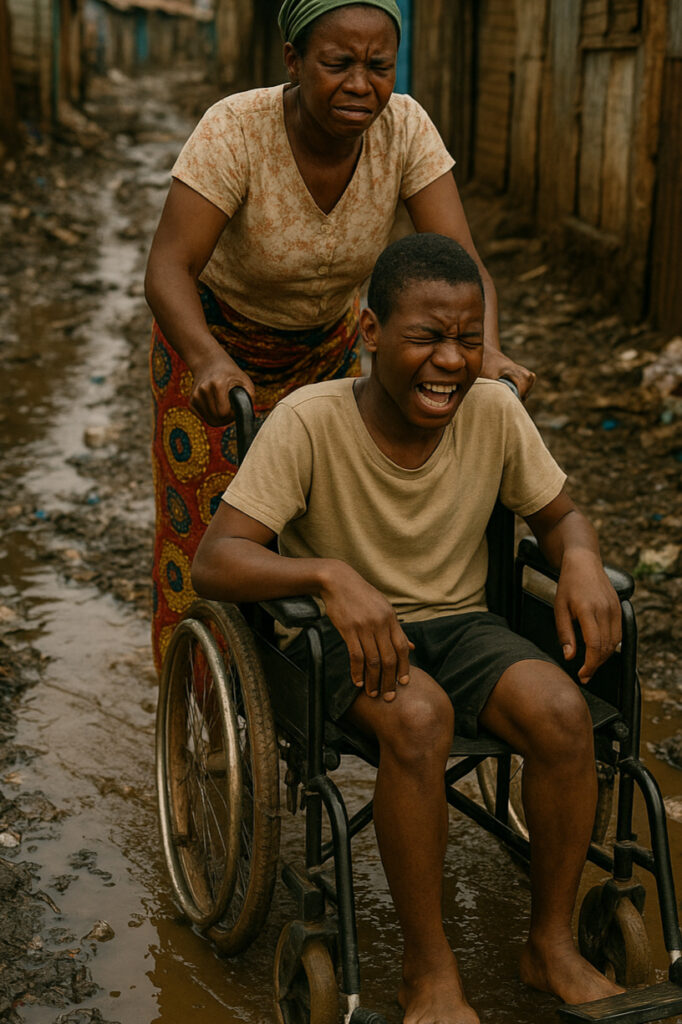
Children with disabilities in informal settlements face layered vulnerabilities:
- Poverty and unemployment in their households
- Limited access to health services
- Stigma and discrimination
- Inaccessible infrastructure
- Lack of inclusive education opportunities
For many families, daily survival takes precedence over specialized care. Clinics may be miles away. Therapy sessions may be unaffordable. Assistive devices are often out of reach. As a result, children risk developmental delays, isolation, and lifelong exclusion.
This is where home-based care for children with disabilities becomes not just helpful—but essential.
What Is Home-Based Care for Children with Disabilities?
Home-based care is a community-centered approach where trained professionals or paraprofessionals visit families directly to:
- Conduct early identification and screening
- Provide basic therapy guidance
- Educate caregivers on home exercises
- Monitor nutrition and hygiene
- Support referrals to health facilities
- Offer psychosocial support
Instead of expecting families to travel long distances, services are brought directly to their doorsteps.
In informal settlements, this model reduces barriers such as cost, transport, stigma, and time constraints. It also recognizes parents and caregivers as active partners—not passive recipients.
Also Reads: Unfolding Success:How Therapy Pathways Change Lives In Jomvu
The Power of Parent Support Groups in Kenya
One parent alone may feel overwhelmed. Ten parents together become a force for change.
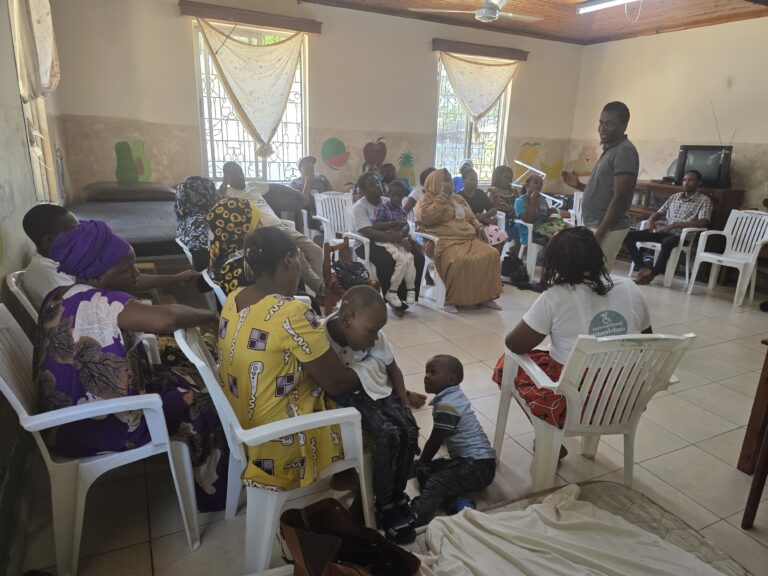
Parent support groups in Kenya are transforming disability inclusion by creating safe spaces where caregivers:
- Share experiences and coping strategies
- Receive disability awareness training
- Learn about assistive technologies
- Access information on social protection programs
- Advocate collectively for inclusive services
These groups reduce stigma at household and community levels. They build confidence among caregivers who previously felt isolated or ashamed.
In many informal settlements, misinformation fuels discrimination. Parent support groups counter this through education, storytelling, and peer mentorship.
More importantly, they create sustainability. Even when external funding ends, relationships remain. Knowledge remains. The collective voice remains.
The Role of Community Health Promoters (CHPs)
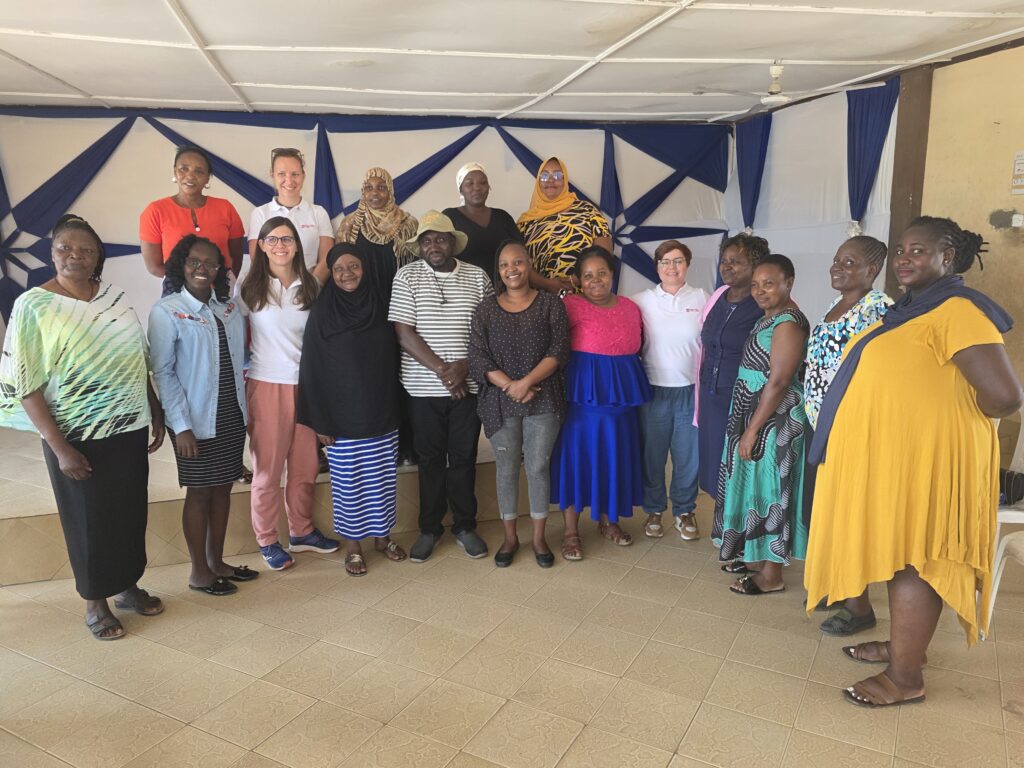
At the heart of this model are Community Health Promoters (CHPs)—trusted individuals drawn from within the community.
CHPs bridge the gap between formal healthcare systems and informal settlements. In disability integration programs, they:
- Identify children at risk of developmental delays
- Conduct household visits
- Educate families on inclusive practices
- Facilitate referrals to hospitals or therapy centers
- Track progress and follow-ups
- Connect families to government services
Because CHPs live within the community, they understand local realities—economic pressures, cultural beliefs, and social dynamics. This trust enhances early detection and consistent follow-up.
Through structured training, CHPs become champions of disability inclusion in informal settlements, ensuring that no child remains hidden.
The BogoBogo Disability Integration Program: A Community-Led Model
The BogoBogo Disability Integration Program exemplifies how home-based care and parent support groups can work together effectively.
In BogoBogo, informal settlement realities mirror many others across Kenya: overcrowding, limited infrastructure, and economic hardship. Children with disabilities were often confined indoors, with minimal exposure to education or play.
The program introduced a three-pronged strategy:
1. Household-Level Support
Trained CHPs conduct home visits to identify children with disabilities and provide caregiver coaching. Parents receive practical guidance on positioning, feeding, stimulation exercises, and hygiene.
2. Formation of Parent Support Groups
Caregivers meet regularly to share experiences, access training, and discuss challenges. These sessions include information on rights, inclusive education pathways, and financial empowerment.
3. Linkages to Social Protection
Families are assisted in accessing social protection for persons with disabilities, including:
- National Council for Persons with Disabilities (NCPWD) registration
- Cash transfer programs
- Assistive device subsidies
- Health insurance enrollment
This integrated approach ensures that disability inclusion is not treated as charity—but as a rights-based framework.
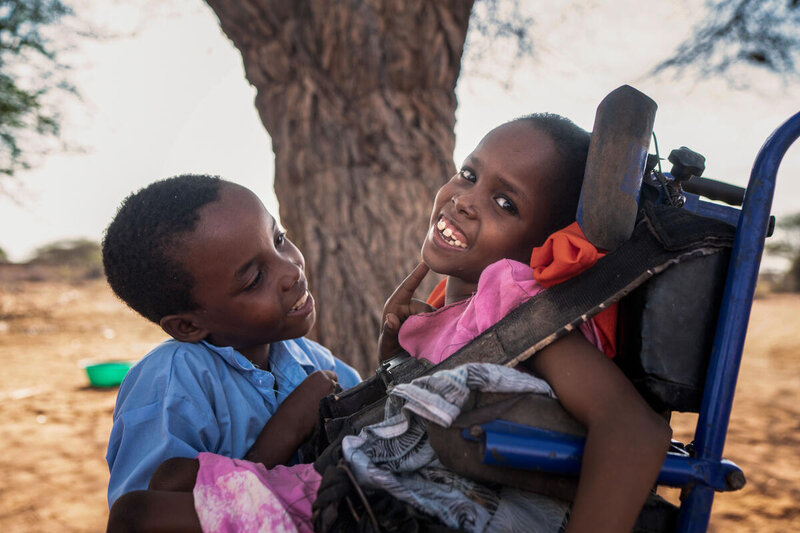
Why Social Protection for Persons with Disabilities Matters
In informal settlements, poverty and disability reinforce each other.
Without financial support, families cannot afford medical care or education. Without education, children face limited economic prospects in adulthood.
Effective social protection for persons with disabilities breaks this cycle by:
- Reducing household vulnerability
- Supporting access to healthcare
- Enabling school attendance
- Providing dignity and independence
However, many eligible families lack documentation or awareness. Home-based care programs, through CHPs and parent groups, play a critical role in ensuring access.
When economic support is combined with community inclusion, the impact multiplies.
Sustainability: Why This Model Works
Many well-intentioned disability interventions fail because they are externally driven and resource-intensive.
The home-based care and parent support group model is sustainable because:
- It builds local capacity – CHPs and parents become knowledge holders.
- It strengthens community ownership – Solutions come from within.
- It reduces costs – Home visits are more affordable than institutional care.
- It fosters advocacy – Parent groups push for systemic change.
- It integrates with government systems – Linking families to existing social protection mechanisms ensures continuity.
In BogoBogo, the program is not just delivering services—it is shifting mindsets. Disability is no longer viewed as a curse or private burden. It is recognized as a development issue requiring collective action.
Breaking Stigma Through Visibility and Voice
One of the most transformative outcomes of disability inclusion programs is increased visibility.
When children with disabilities attend school, play outside, or participate in community events, perceptions change. When parents speak publicly about their journeys, silence breaks.
Parent support groups in Kenya are increasingly engaging in community dialogues, religious forums, and local meetings to advocate for inclusion.
Inclusion begins with awareness—but it is sustained through participation.
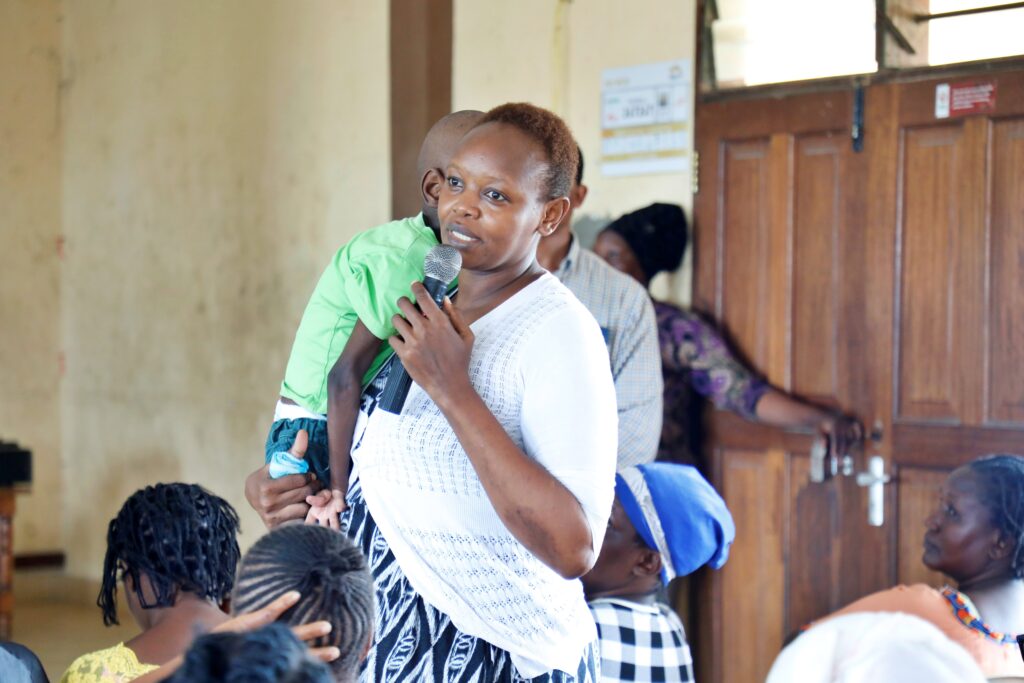
The Ripple Effect: From Household to Policy
What starts as home-based care can influence broader systems.
Data collected by CHPs helps identify service gaps. Parent groups can advocate for accessible infrastructure. Community-led programs can inform county and national disability policies.
The BogoBogo Disability Integration Program demonstrates that grassroots models can influence governance—ensuring that disability inclusion in informal settlements becomes a policy priority, not an afterthought.
A Future Where No Child Is Hidden
Imagine informal settlements where:
- Every child with a disability is identified early.
- Parents are empowered, not isolated.
- CHPs are trained in inclusive care.
- Social protection reaches those who need it most.
- Communities celebrate diversity rather than stigmatize it.
This is not an abstract dream. It is already happening—one home visit, one parent meeting, one referral at a time.
Home-based care for children with disabilities, strengthened by parent support groups and Community Health Promoters, offers a scalable, sustainable path toward inclusion.
And when communities lead, change lasts.
Frequently Asked Questions (FAQs)
1. What is home-based care for children with disabilities?
Home-based care involves trained professionals or CHPs visiting families to provide support, therapy guidance, and referrals within the home environment.
2. Why is home-based care important in informal settlements?
It reduces barriers such as transport costs, stigma, and limited access to specialized facilities.
3. What are parent support groups in Kenya?
These are community-based groups where caregivers of children with disabilities share experiences, receive training, and advocate for inclusion.
4. Who are Community Health Promoters (CHPs)?
CHPs are trained community members who link households to healthcare services and support early identification and follow-up care.
5. How does the BogoBogo Disability Integration Program work?
It combines home visits, parent support groups, and social protection linkages to promote disability inclusion.
6. What is social protection for persons with disabilities?
These are government programs such as cash transfers, health insurance, and assistive device subsidies that support persons with disabilities.
7. How do parent support groups reduce stigma?
By increasing awareness, encouraging peer support, and promoting community dialogue about disability rights.
8. Can home-based care replace institutional therapy?
It complements institutional care and ensures continuous support, especially where access to facilities is limited.
9. How can families access disability registration in Kenya?
Through the National Council for Persons with Disabilities (NCPWD), often with assistance from CHPs or support organizations.
10. Is this model scalable to other informal settlements?
Yes. Because it builds local capacity and integrates with existing systems, it can be replicated in similar contexts across Kenya.